
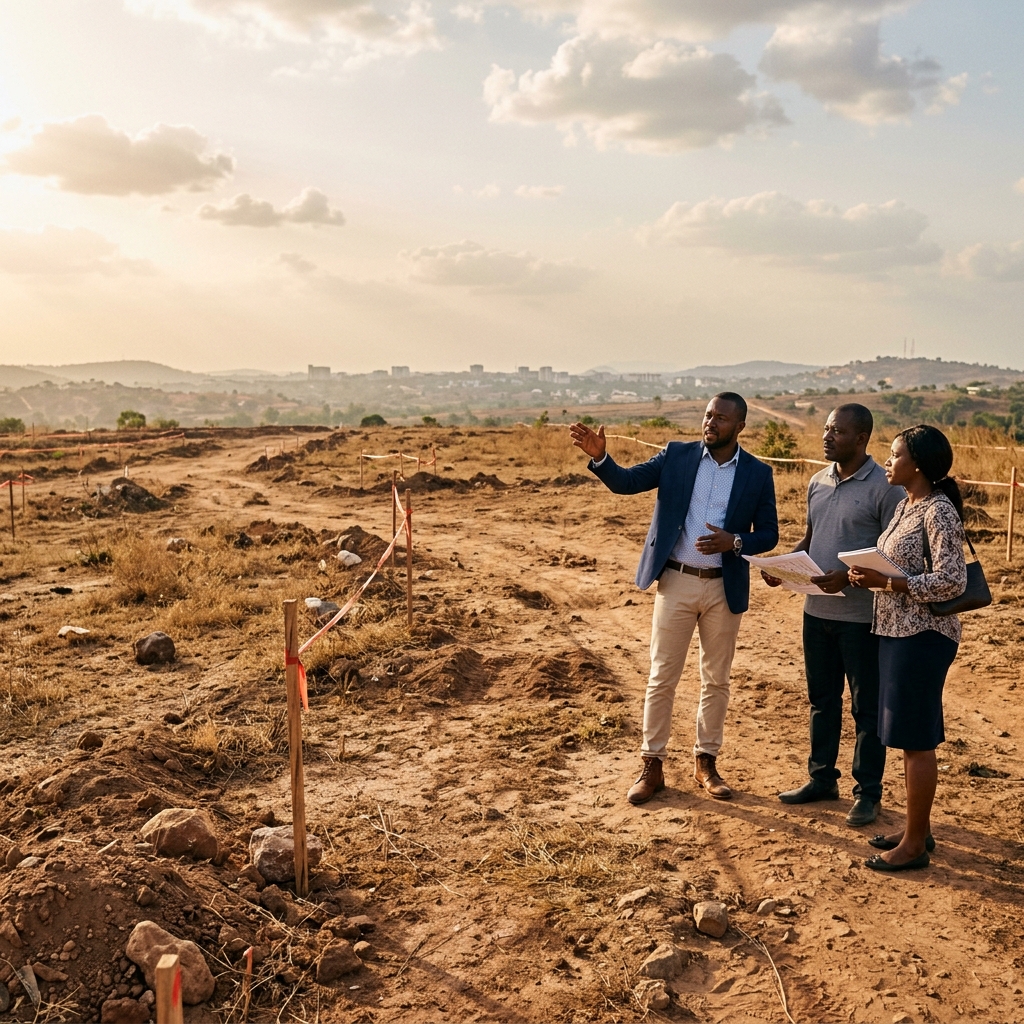
The first land I bought was in the east. Around ₦400,000. Later, I found the courage and the faith to buy another. That one was double the price. Both were full plots, priced the way they were because of their remote location.
For someone who grew up without much financial guidance, buying land felt like an enormous leap. No blueprint and mentor pointing the way. I moved on instinct and a belief that owning something. Anything was better than owning nothing.
The Abuja Lesson
When I wanted to buy property in Abuja, I ran into a wall I hadn't expected: I didn't have enough cash for a full plot with proper documentation. In Abuja, documentation isn't optional. The market is littered with insincere developers, and a handshake deal can cost you everything.
The plot was 250 sqm, designed to accommodate a 3-bedroom bungalow and two parking spaces. Not huge but it was fully documented. And it was mine.
I made the initial deposit and spread the remaining payments across several months. That was my first documented landed property in Abuja.
That plot has appreciated over 95% since I bought it. And as it turned out, my company was later contracted to design the estate, a connection I could not have planned.
It's better to own part of something than to own nothing at all.
The Bigger Problem
Most people wait. They save. They tell themselves they'll enter the market when they finally have enough for a full plot. Meanwhile, land prices do what they always do, they climb.
Land in Abuja never gets cheaper. Every year that passes while you're waiting is a year of appreciation you didn't capture, and a higher entry price you'll have to clear the next time you feel ready.
The message spoken through price tags, through the sheer impossibility of certain numbers, is that this city is not for the teacher, the civil servant, the small business owner, or the young professional still finding their feet.
That message is wrong.
The Solution: Fractional Ownership
Fractional ownership isn't a compromise but a doorway to start your real estate journey.
Real estate companies introduced it because the barriers to entry in cities like Abuja and Lagos have become genuinely prohibitive for average earners. The model is straightforward: if you cannot afford 1,000 sqm or 500 sqm, you can still own land. You can start with what's within reach.
A viable starter plot with room for a compact, well-designed home.
Entry PointEnough space for a 2-bedroom bungalow with a small garden.
Popular SizeComfortable for a 3-bedroom bungalow and two parking spaces.
RecommendedAnd critically with flexible payment plans designed for real incomes, not wishful thinking. You spread the cost across months, not years of saving before you even begin.
You don't need to wait until "things get better."
Land is one of the few assets that has never, in any sustained period, become cheaper. The question is never whether it's the right time. The question is whether you're going to be in the market when it moves.
Start where you are. Own what you can afford right now. Because what matters is not owning everything at once, it's owning something, and letting time do the rest.