
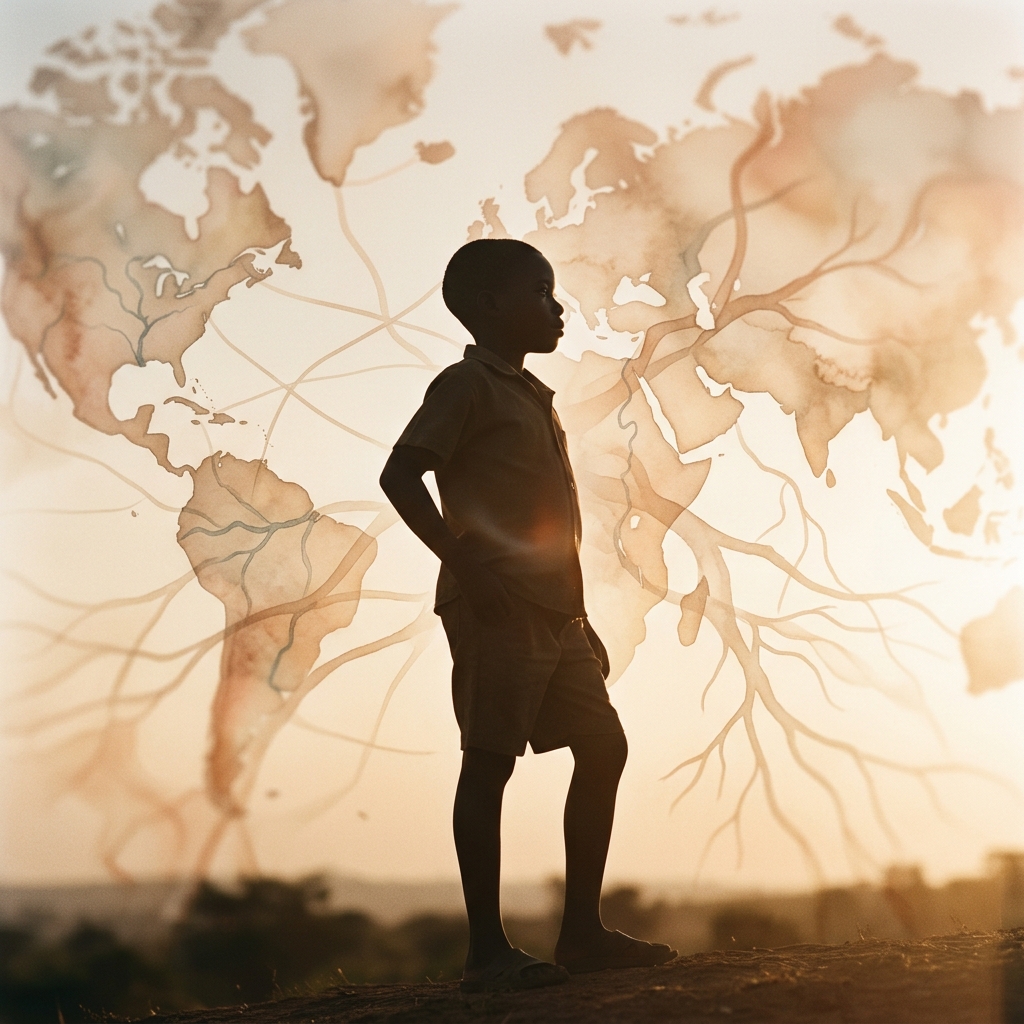
I am from Ebonyi State, but I grew up in Anambra State, specifically in Onitsha. Growing up, I was constantly reminded that I did not belong.
Whenever people wanted to demean us, they would call us "Nwa Abakaliki." Anyone from Ebonyi State was casually stereotyped as an okada rider, a barrow pusher, or someone destined for menial jobs. The profiling was so common and so deeply ingrained that I began to wish I was from Anambra State.
It affected my self-esteem more than I realized at the time. By the time I got to secondary school, whenever my classmates asked where I was from, I lied. I told them I was from Anambra. Because I grew up in Onitsha and spoke the dialect fluently, nobody questioned it.
I was ashamed of where I came from.
Looking back now, it is strange to think that children could carry that kind of burden. But many of us did. We grew up subconsciously believing that being from Ebonyi State made us less than others.
My mother did not intentionally allow that mindset to develop. She simply did not realize what those jokes, labels, and stereotypes were doing to us. The voices around us were louder than the conversations happening at home, and over time, the damage took root.
That experience shaped how I view prejudice today.
Because of it, whenever conversations about racism come up, I tend to see them through a different lens. Not because racism is not real, but because I learned very early that prejudice is not unique to any race. It is a human problem.
People have a remarkable ability to feel superior to others because of things they contributed absolutely nothing to. The state they were born in. The tribe they belong to. The color of their skin. The country on their passport.
Yet none of us chose any of those things.
You did not decide where you would be born. You did not decide your tribe, your nationality, or the family that would raise you. They are gifts of providence, not personal achievements. It makes little sense to take pride in them as though they were accomplishments, and even less sense to use them as weapons against other people.
For years, I tried to outrun where I was from.
The shift began when I started growing in my faith. For a long time, I thought the solution to my inferiority complex was proving that an Ebonyi boy could be just as successful as an Anambra boy. But eventually I realized that healing was not going to come from proving anybody wrong.
It would come from discovering what God said about me.
When I read the Scriptures and saw that in Christ there is neither Jew nor Greek, slave nor free, it was no longer just theology on a page but personal revelation of the position of God regarding our geographical origin.
I realized that my identity was never supposed to be anchored to a state, a tribe, or a geographical location. It was anchored to the God who intentionally placed me where I was born.
For the first time, I understood that my birth in Ebonyi State was not an accident that needed correcting. It was part of God's design. That realization set me free.
I stopped feeling inferior because I was from Ebonyi State. I stopped feeling inferior because I was from Nigeria.
Today, there are Nigerians living abroad who hide where they are from because they are afraid of the stereotypes attached to our country. In many ways, they are doing the same thing I did in secondary school. They are trying to distance themselves from an identity they believe may work against them.
I understand the temptation because I once lived there.
But today, I am proud of where I come from. It was not a mistake that God brought me into the world through a family in Ebonyi State, Nigeria. That reality no longer embarrasses me.
This is why fathers have such an important responsibility.
A boy's identity is still forming, and it does not take much to damage it. When a boy constantly hears that he is less valuable because of his state, tribe, family background, or social status, those words settle deeper than we imagine.
The effects rarely stop in childhood. They often follow him into adulthood, shaping how he sees himself, how he relates with others, and what he believes he deserves.
Fathers must intentionally ground their sons in identity. A boy should hear so clearly who God says he is that the noise around him struggles to compete.
But while speaking to fathers, I must also admit that many fathers contribute to the problem.
You hear parents profiling people in front of their children all the time. "Don't associate with that boy because he is from this state," or "Be careful of those people because they are from that tribe."
Children absorb these things. Before long, they begin to believe that some people are naturally superior and others naturally inferior.
The cycle continues.
If we want a different society, we have to stop reinforcing these stereotypes at home.
Today, if you ask me where I am from, I will not hesitate and I will not borrow another town's name.
I am from Ebonyi State, Nigeria.
The boy who lied to his classmates is gone. In his place stands a man who understands that he is exactly where God intended him to be.