Fatherhood is not a function. It is a design.
And until we understand the difference between what a person does and what a person is, we will keep reducing one of the most sacred roles in human existence to a checklist of duties and then wonder why our children are struggling to know who they are.
I want to talk about fathers. About what fatherhood really means. And about a trend that, with respect, I believe is doing real damage - the growing habit of celebrating mothers on Father’s Day because they “did it all.” I understand where it comes from. But I want to make the case, as plainly as I can, that it is a mistake.
Design Comes Before Function
God created man in His image and likeness. His first design was before any function. Before man did anything, he was already something.
There are people who carry the image of God who do not function like God. There are Christians who have received the Holy Spirit but haven’t begun to live like it. And Jesus was clear: doing good things does not mean the image of God has come inside of you. Design and function are related, but are not the same thing.
By biological design, a man releases sperm. A woman carries and births life. If a man is infertile, it does not make him less of a man. If a woman never bears a child, it does not reduce her as a woman. It means there is a malfunction, but the design has not changed. These things are exclusive to each sex by design, not by performance.
If a man dies and a woman takes on the responsibility of providing for the children: paying bills, working, holding the house together, she is heroic. She is doing something extraordinarily difficult. But she is not the father. Calling her a father does not honor her sacrifice. It actually reduces men to nothing more than what they do. It says: a father is just a provider. And fatherhood is far beyond provision.
The same is true in reverse. If a woman dies in childbirth and a man raises the child, finds a way to nurture and care for them, he cannot wake up tomorrow and call himself the mother. He is the father. A faithful, present, sacrificial father. That is enough. That is everything.
What Is Really Being Transferred
People think fatherhood is about money. It is not. There are men with money who cannot build solid families, cannot lead a home, and cannot manage their own character. Provision is part of fatherhood. It is not the whole of it.
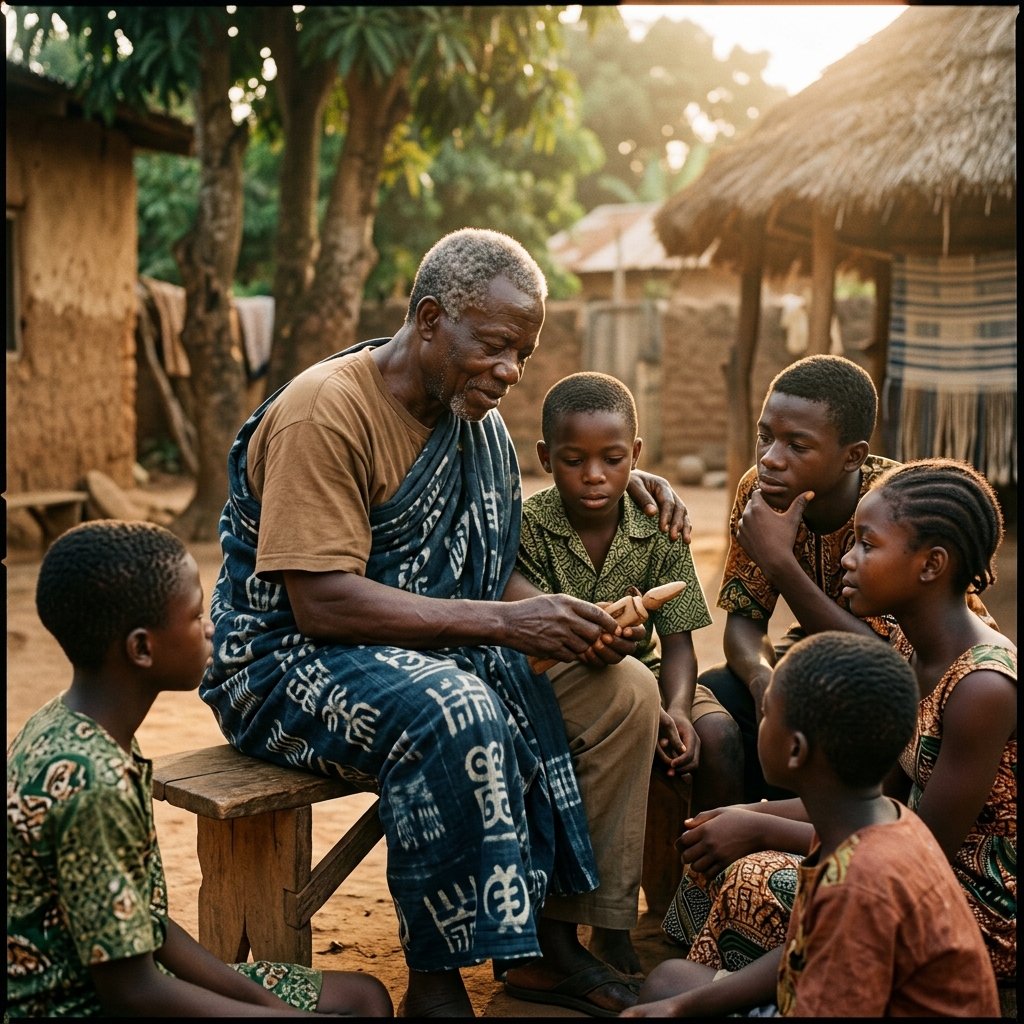
Beyond provision, a father transfers identity. The way a man speaks into his son or daughter, the way he models what a man is, the way he holds the household in a particular kind of gravity, cannot be replicated by a woman. This is not a slight against women. It is an acknowledgement of design.
This is why identity crises are so prevalent in children raised without fathers, especially sons. And it is made worse when the mother, through no entirely bad intention, transfers her own unresolved pain about the man onto the children. She does not always know she is doing it. But the children absorb it. They grow up not just without a father, but with a distorted image of what a father is.
Father’s Day Is for Fathers
On Mother’s Day, we celebrate mothers. We do not celebrate fathers who stayed when their wives left. We do not post men who stepped up and mothered their children alone. It is a sacred day for women who are mothers, and we honor that without confusion.
Father’s Day deserves the same respect.
When people celebrate their mothers on Father’s Day, I do not think they intend harm. Many of them grew up in genuine pain. Their fathers were absent, or present in body but absent in soul. Their mothers worked themselves to the bone. The impulse to honor that is not wrong.
But the way to honor a mother who covered for an absent father is not to make her a father. The way to honor her, is to become a solid man that she be proud of. And this can be possible by observing and learning under good father figures.
If your biological father was not present in your life, you can choose not to post him on Father’s Day. That is wisdom. But there is likely a man, an uncle, a pastor, a teacher, a mentor, who showed up for you in some fatherly way. Celebrate him. Celebrate the men who reflected fatherhood to you, even imperfectly.
What I Know From My Own Life
I grew up early without a father. I know what that absence feels like. I appreciate, deeply, what my mother did in those years, she stepped into spaces she was never designed to fill, and she did it out of love. It strained her and I do not take that lightly.
But I also know this: I needed men to grow up. I needed to watch men. I needed men to speak to me in the particular way that only men can speak to a boy who is becoming a man. My mother could not give me that. Not because she was insufficient. Because she was not designed to.
On Father’s Day, I celebrate my father, posthumously. I hold the memory of him, the little I knew of him, the image my family preserved for me. And then I celebrate the men God used to raise me. The men who called something out of me. The men who modelled, even when they didn’t know they were modelling.
Because of them, I know what a father is. And because I know what a father is, I will not reduce the day that belongs to fathers.
A Word to Single Mothers
I want to speak carefully here, because there are different kinds of single mothers, and they do not all deserve the same word.
There is the woman who was abandoned. Who did not choose this life. Who has been carrying a weight she never asked for, holding children together with nothing but love and exhaustion. To that woman, I say: I see you. What you are doing is sacred work. But even you, especially you, must find men your children can observe. Not to replace you. To complete the picture.
And then there is the woman who, in her pain, has allowed her hatred of the man to become her children’s inheritance. That is the thing I want to address most directly. Because when a mother poisons her children against their father, even a father who genuinely failed, she does not protect them. She wounds them in a place they may not even recognize until they are adults, sitting with their own brokenness, trying to understand why they cannot trust men, or be a man, or love a man.
Shield your children from that hatred. If their father did not do well, tell them plainly: he did not do well because he did not know well. Then find them a man who does know. In school, in church, in your community, find a man they can submit to, observe, and learn from. It will build their discipline. It will ground their identity. It will give them a reference point for what a man should be.
How you frame fatherhood to your children is how they will frame it for the rest of their lives. Give them a good image. Even if it is not their biological father’s image, give them something worth honoring.
You Become What You Are Designed to Be
There is a thought that has been spreading, that what you identify as, or the functions you perform, makes you that thing. That if you do enough of what a man does, you become a man. If you perform enough of what a father does, you become a father.
But you become what you are designed to be. Not what you perform.
God created man to be the foundation of families, societies, and communities. That is not because man earned it. When God made man the foundation, man had not yet done anything on earth. It was by divine design, established before function. And the design of God does not change just because a man becomes incompetent in his duties. The position remains. The vacancy remains. And children feel that vacancy, whether or not anyone names it for them.
This is why we need to go back to authentic fatherhood. Not the performance of it. The real thing. Men who understand that they carry something irreplaceable. Men who show up not just with money but with presence, with voice, with identity to transfer.
Father’s Day Is Not an Insult to Mothers
Let me end where I started.
Father’s Day is for fathers. It is not a competition with mothers. It is not a commentary on whose sacrifice was greater. It is a day that belongs, by definition, to men who are fathers - biologically, spiritually, functionally and to the children who honor them.
When we allow that day to be diluted, when we post our mothers on that day and call them our fathers, we are not honoring our mothers. We are telling our children, and ourselves, that fatherhood is optional. That it can be substituted. That what a man carries for his children is nothing a woman cannot carry just as well.
And that, I believe, is where we begin to lose our children.
Let children observe fatherhood. Let them grow up with a good image of what a father is. Let them know that the vacancy they felt, if they felt one, was not because fathers are unimportant, but because that particular man did not know how to fill what God designed him to fill.
And then let us, as a generation, decide to do better.